
3 min readBy Artcolor
What is a COB LED strip? Dotless LED strip lights explained
A COB LED strip carries bare LED chips under one continuous coating, so it lights as a line, not a row of dots. How it differs from an SMD strip, and where it works best.
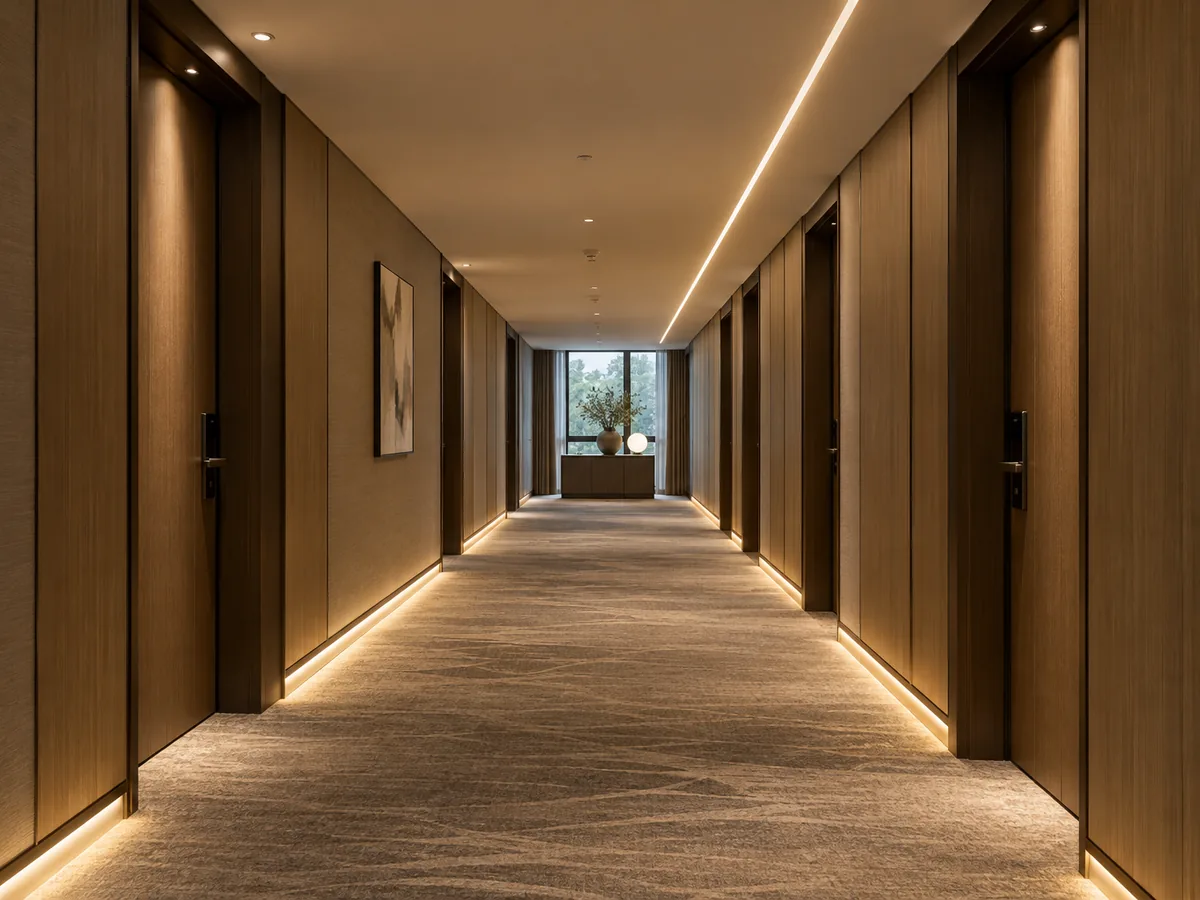
A COB LED strip is a flexible LED strip whose LED chips are mounted directly on the circuit board, close together, under one continuous layer of phosphor. COB stands for chip on board. Because the light comes from an unbroken coating instead of separate LED packages, a COB strip shows a continuous line of light with no visible dots, even without a diffuser. It is often called a dotless LED strip.
COB and SMD LED strips
Most LED strips are SMD strips: packaged LEDs, such as the 2835, soldered along the board at a set spacing.
| SMD LED strip | COB LED strip | |
|---|---|---|
| Build | Packaged LEDs soldered along the board | Bare chips on the board under a continuous coating |
| Look without a cover | A row of bright points | A continuous line |
| In a profile | Needs depth and a diffuser to blend the dots | Stays smooth in slim, shallow profiles |
| Beam | Depends on the LED package | Wide; 180° on Artcolor's COB strips |
COB is not better in every way. Output, efficacy and colour quality depend on the chips and the design, so compare datasheets, not formats.
Artcolor COB LED strips
The COB Series has eight models, all with a 180° beam, 5 m reels and IP20, IP54, IP65, IP67 or IP68 versions:
- Single colour on 12 V and 24 V (480 chips/m, 8 mm PCB) in 2700K, 3000K, 4000K or 6500K with CRI > 90, plus seven colours on 24 V; and a 48 V white strip for long runs.
- Tunable white from 2700K to 6500K (576 chips/m, 10 mm).
- RGB, RGBW and RGBCCT for colour mixing (840 chips/m, 10 or 12 mm).
- Addressable RGB (SPI) for chases and pixel effects (720 chips/m, 10 mm).
The single-colour strips cut every 50 mm at 24 V and every 25 mm at 12 V, and join with matching clip connectors.
Where COB strips work best
- Display cases, shelves and cabinets, seen from close up. See display cabinet lighting.
- Glossy surroundings: glass, polished stone and lacquer reflect every LED point of an SMD strip. See avoiding LED dots in reflections.
- Shallow profiles and visible lines in joinery, handrails and ceiling details, where there is no room to blend the dots.
- Coves and corridors, where a continuous line reads as part of the architecture. See cove lighting.
Getting a good line
- Approve a lit sample. Dotless is a visual result: check it in the intended profile and diffuser, from where people will look.
- Choose the profile. A COB strip needs less depth than an SMD strip, but a diffuser still softens glare in direct view. See how to choose an LED strip channel.
- Cut only at the marks. Cut at the marked cut points, then join with the matching clip connectors or by soldering leads to the copper pads.
- Plan the feed points. Long runs need power at more than one point; the 48 V model suits the longest runs.
COB LED strip FAQ
What does COB mean on an LED strip?
COB means chip on board: bare LED chips are mounted directly on the strip's circuit board and covered by one continuous layer of phosphor, instead of being packaged one by one and soldered on.
Is a COB LED strip really dotless?
Its light shows as a continuous line without separate points, even close up and in shallow profiles. How smooth it looks in a project still depends on the profile, the diffuser and the viewing distance, so approve a lit sample first.
Is COB better than SMD?
Not always. COB is the choice when the visible line matters. An SMD strip can be the better choice for a particular LED package, a set efficacy, a specific optic or a certification tied to an existing model. Compare both against the same specification.
Where can a COB LED strip be cut?
Only at its marked cut points. On Artcolor's single-colour COB strips, that is every 50 mm at 24 V and every 25 mm at 12 V.
Do COB strips come in colour and tunable white?
Yes. Artcolor's COB Series includes tunable white (2700K to 6500K), RGB, RGBW and RGBCCT strips, and an addressable SPI strip for pixel effects.
Planning a dotless line?
Send us the profile, the run lengths and a photo or drawing of the detail, and we will suggest a COB strip to sample. Contact us, or browse the COB Series.
- Guides
- LED strip
- COB