
3 min readBy Artcolor
What is wall wash lighting? Wall washer lights explained
Wall wash lighting spreads light evenly over a whole wall. What a wall washer light is, how washing differs from grazing and accent light, and where it is used.
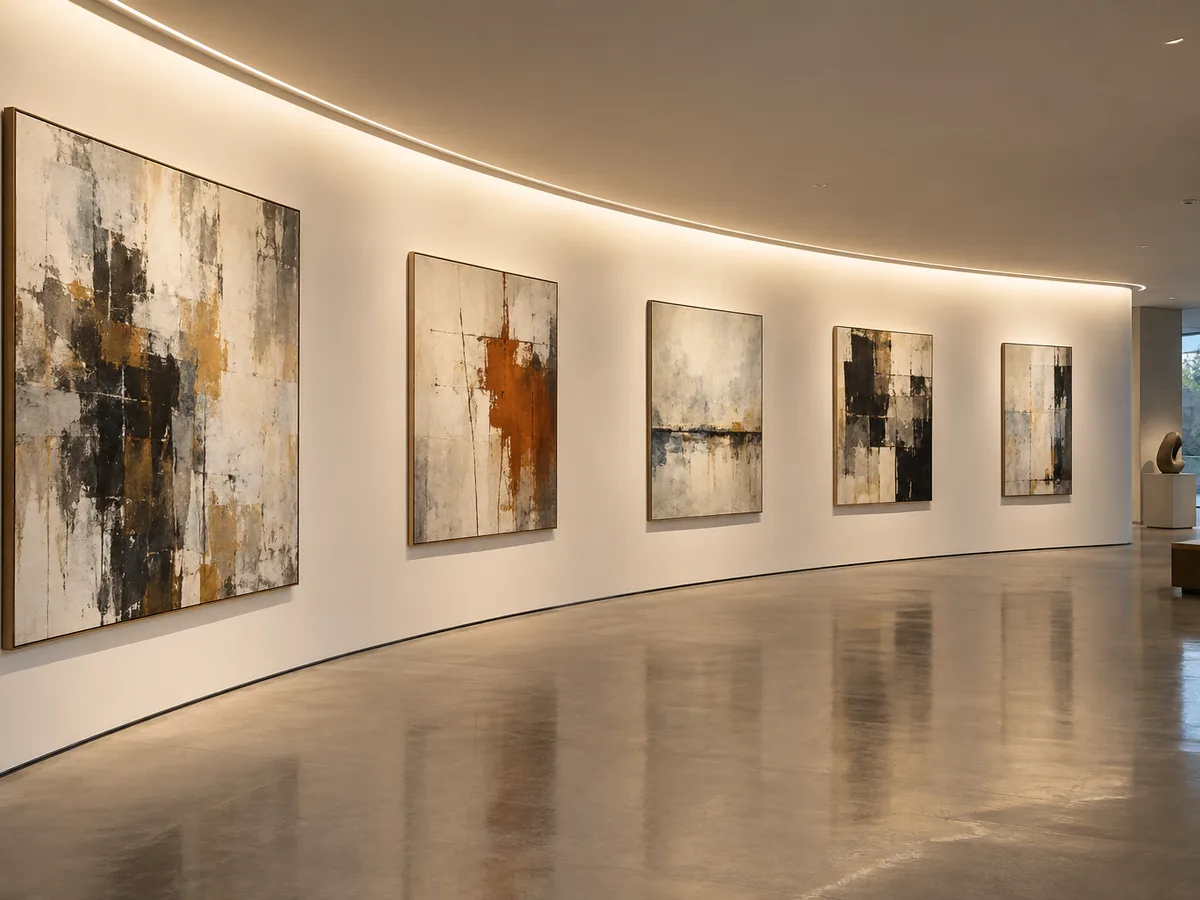
Wall wash lighting lights a whole wall evenly, from top to bottom, so the wall reads as one smooth, bright surface. A wall washer light is a fixture made for this: its lens or reflector spreads light across the wall instead of throwing a spot or a pool.
Washing, grazing and accent light
All three light a wall. The difference is where the light sits and what it shows.
| Technique | How it is lit | What you see |
|---|---|---|
| Wall washing | Set back from the wall, or through an optic that spreads light across it | An even wall; surface texture is softened |
| Wall grazing | Very close to the wall, light running along its surface | Strong texture in stone, brick or timber |
| Accent lighting | Aimed at one object | A bright artwork or display on a darker wall |
What a wall washer light is
A wall washer is a luminaire with optics, not a bare light source. Common forms are:
- Recessed or track wall washers in the ceiling, set back from the wall.
- Linear wall washers along the top or the foot of a wall or façade.
- Flexible linear wall washers, which bend to follow curved walls and columns.
Artcolor makes flexible LED wall washers for façades, walls and artwork: Lumea and Kello bend to follow curved surfaces, and MechFlex is modular. For straight walls and façades there are the Link linear wall washers. For a wash from a standard LED strip, the AL-1848 wall washer profile (18.2 × 48.6 mm) takes an 8 mm strip.
Where wall washing is used
- Galleries and museums: an even wall lets people see the work, not the lighting.
- Hotel lobbies, corridors and retail: lit walls make a room feel brighter and more open.
- Façades: a washed wall shows the building's form after dark.
Getting a good wash
- Match the beam to the wall. A narrow beam reaches further up a tall wall; a wider beam suits a low wall seen up close.
- Light the wall, not the roof. On a façade, wash down from the eaves or up from the ground, and leave the roof dark.
- Watch glossy surfaces. Matte walls wash evenly; polished stone, glass and lacquer reflect the light source itself. See avoiding LED dots in reflections.
- Mock it up. Try a sample length on the real wall and look from where people will stand (for a façade, at night).
Wall wash lighting FAQ
What is a wall washer light?
A wall washer light is a luminaire whose lens or reflector spreads light evenly over a wall, from top to bottom, instead of throwing a spot or a pool. It can be a recessed or track fixture in the ceiling, a linear wall washer along the top or the foot of a wall, or a flexible linear wall washer for curved surfaces.
What is the difference between wall washing and wall grazing?
A wall wash is lit from a distance, or through an optic that spreads the light, so the wall looks even and its texture is softened. Grazing puts the light very close to the wall, so that it runs along the surface and brings out the texture of stone, brick or timber.
Where is wall wash lighting used indoors?
On gallery and museum walls, in hotel lobbies and corridors, and in retail. An evenly lit wall makes a room feel brighter and more open, and in a gallery it lets people see the work, not the lighting.
Can wall wash lighting be used on a façade?
Yes. A washed façade shows the building's form after dark. Wash down from the eaves or up from the ground, and leave the roof dark.
Which beam angle suits a wall washer?
It depends on the wall. A narrow beam reaches further up a tall wall; a wider beam suits a low wall seen up close. Artcolor's Link linear wall washers have beams from 8° to 60°. Try a sample length on the real wall before you decide.
Planning a wall wash?
Send us the wall height, the surface and a photo or section drawing, and we will suggest a wall washer to sample. Contact us, or browse our flexible LED wall washers.
- Guides
- Wall washer
- Architectural lighting