
2 min readBy Artcolor
Right at both ends, off in the middle. Specifying tunable white LED strip
Tunable white often looks right at full warm and full cool, and slightly wrong at the settings people actually use. How to define endpoints, mixing and output across the range.
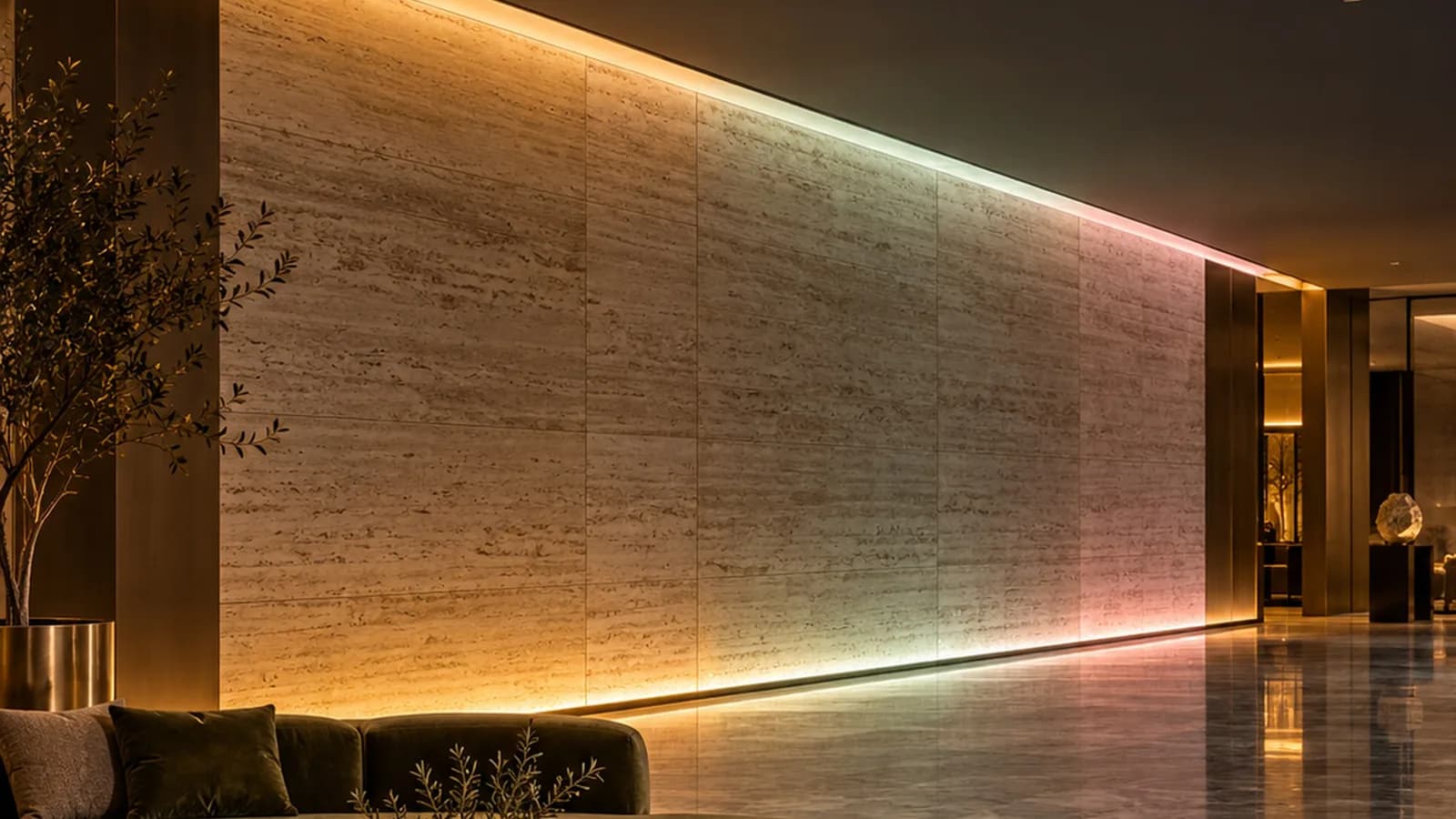
A tunable white system is approved at full warm and at full cool. Both ends look right. Then the lobby runs at the in-between settings all day, and those don't quite match: a little green, a little pink, or noticeably dimmer than expected.
How tunable white works
Most tunable white strips carry two white channels, one warm and one cool. The controller mixes them: all warm at one end, all cool at the other, and a blend of the two for everything in between.
The ends are easy, because each is one channel on its own. The middle depends on how the two channels mix, and the mix doesn't always land where the label suggests:
- The blend can drift off the ideal white line. Mixing two whites produces a colour between them, which isn't always the white you expect at that CCT.
- Output can sag in the middle. Depending on how the channels are driven, the combined output at mid settings can differ from the ends.
- Drivers and controllers matter. The way the controller maps a "3500K" command to the two channels affects what you actually get.
What helps
- Define the warm and cool endpoints, not just a CCT range. "2700–6500K" describes a range. The actual endpoints, including their chromaticity, describe the product.
- Agree how the channels mix, then check the mid settings you'll really use. If the space spends its day at 3000K and 4000K, approve those settings on site, not only the two ends.
- State the output you need across the range. Not only at full warm or full cool. If the space needs a certain brightness at every setting, say so in the brief.
- Specify the control system with the strip. For tunable white over DALI, specify suitable DT8(Tc) gear. The strip, driver and controller should be confirmed together.
As our technology page puts it: for tunable white, define the warm and cool endpoints, mixing behaviour and required output across the adjustment range.
A short brief for tunable white
- Warm and cool endpoints (CCT and chromaticity)
- The CCT settings the space will use most
- Required output at those settings
- Control protocol and gear (e.g. DALI DT8, DMX)
- Who approves the mid settings, and on which materials
Where it matters most
Hotel lobbies that change through the day, galleries that adjust white to the work on show, offices following a daylight schedule, and retail spaces that switch between day and evening scenes. In all of them, the in-between settings are where people actually live.
See our tunable white LED strips, or send us the scenes you plan to run and we'll suggest a strip and control setup to sample.
- Guides
- LED strip
- Tunable white