
2 min readBy Artcolor
Perfect on day one, tired a year on. LED strip, heat and sealed coves
When one stretch of a cove turns dim and yellow before the rest, heat is usually the reason. How mounting, sealing and W/m change the thermal picture, and what to plan before the joinery is built.
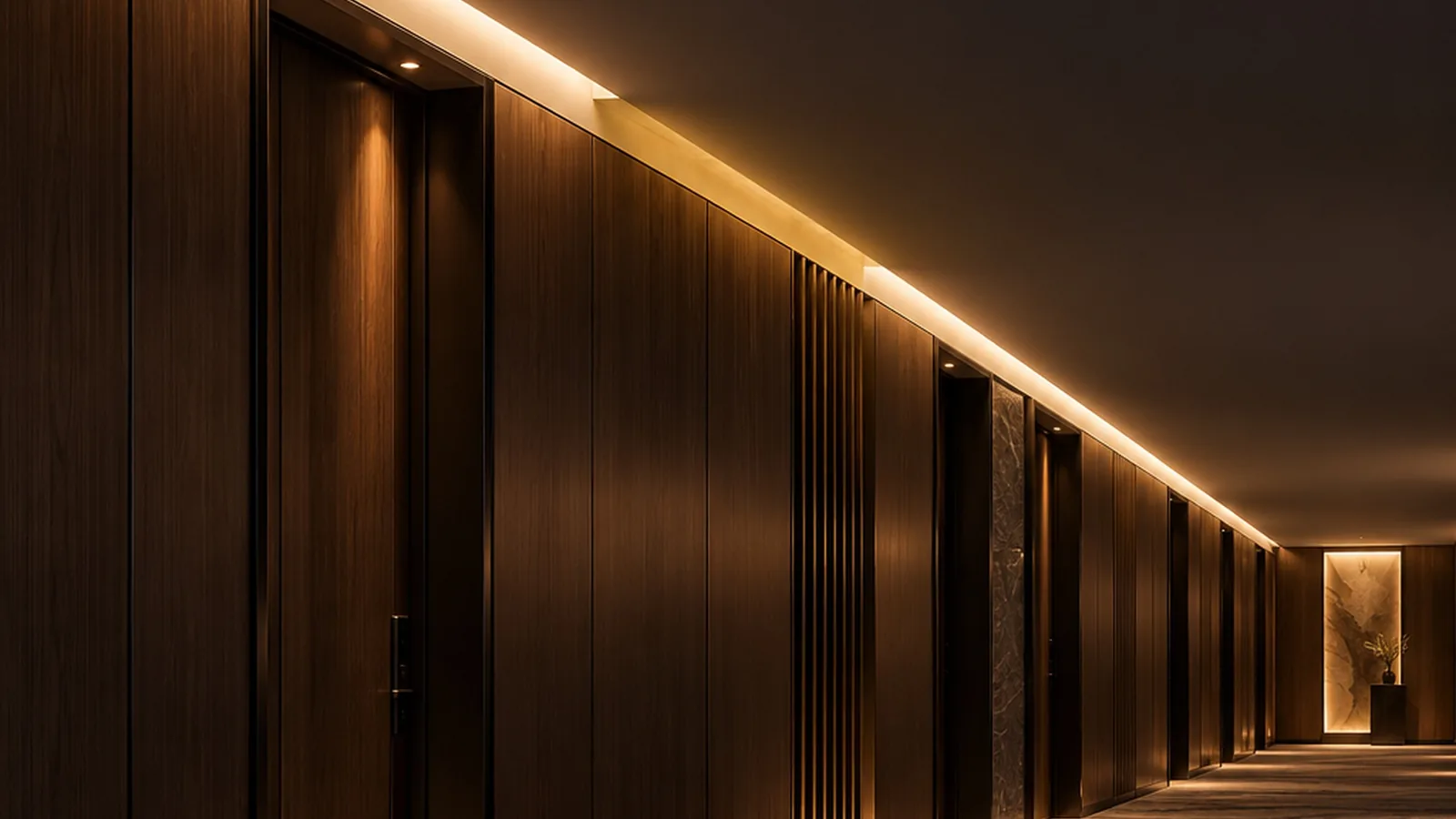
The cove looked perfect at handover. A year later, one stretch has turned dimmer and more yellow than the rest. Often it's the section in the tightest corner, the one closest to a downlight or the one that was hardest to reach.
That pattern usually points to heat.
Why heat matters
An LED strip turns part of its power into light and the rest into heat. That heat has to leave through whatever the strip is mounted on.
- On an aluminium profile, with full contact along its length, the heat spreads away from the LEDs.
- On timber, plasterboard or inside a tight closed cove, it has nowhere to go. The strip runs hotter.
- Wrapped in silicone or sealed for protection, the strip carries its own insulation.
- At a higher W/m, there is simply more heat in the same length.
A strip that runs hotter tends to lose output and shift in colour sooner, and the warmest stretch usually ages first. That's why the problem shows up in one place rather than evenly along the run.
As our technology page puts it: review copper, cable loss, heat transfer into the mounting profile and ambient temperature. Increasing W/m or sealing the strip changes the thermal conditions; longer installations need a documented feed plan.
What helps
- Mount the strip on an aluminium profile with full contact. Not directly on timber or plasterboard. The profile is part of the thermal design, not just a neat finish.
- Recheck heat whenever the specification changes. If you raise the W/m for more output, or switch to a sealed version for a damp area, look again at the real cove depth, the airflow and the ambient temperature.
- Draw the feed plan before the joinery is built. Long runs need power fed in at planned points. Cable loss and voltage drop add their own stress, and access is easiest before the cove is closed. Every Artcolor strip is specified for runs of up to 5 m per power feed. See our guide to choosing 12 V, 24 V or 48 V.
- Leave access for maintenance. A section that can be reached can be checked and replaced.
Questions to ask at design stage
- What is the strip mounted on, and does it have full contact?
- Is the cove open or sealed, and what is the ambient temperature around it?
- Is the strip sealed (silicone, extrusion) or open?
- What W/m is specified, and is that output actually needed?
- Where are the feeds, and can they be reached later?
Where it matters most
Hotel corridors and lobbies with continuous coves, retail shelving with strips close to lamps or electronics, joinery in kitchens and bars, and any closed detail where the strip runs for long hours each day.
If you're detailing a cove, send us the section with the profile, run lengths and the output you need. We'll review the strip, W/m and feed plan together.
- Guides
- LED strip
- Power